What Is Blue Louise Quartzite?
Blue Louise Quartzite is a highly distinctive natural stone originating from Brazil. Unlike relatively uniform quartzites, Blue Louise is characterized by complex mineral movement and strong color transitions across individual slabs.
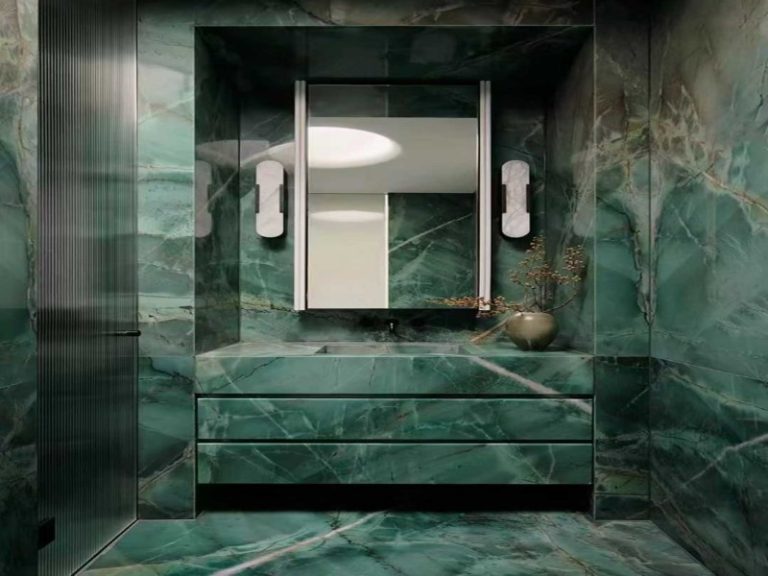
The material may combine areas of turquoise blue, steel blue, blue-grey and green with gold, ochre, rust, burgundy, cream and white. The colors often form broad flowing fields, irregular mineral bands and dramatic abstract formations rather than a conventional linear vein pattern.
In the international stone trade, the material is most commonly marketed as Blue Louise Quartzite, while Blue Louise Granite and Louis Blue Granite are also established commercial names. For specification and project use, the exact slab batch and supplier classification should therefore be confirmed rather than relying only on the commercial name.
Alternative & Commercial Names
- Blue Louise Quartzite
- Blue Louise Granite
- Blue Louise
- Louis Blue Granite
- Blue Luise Quartzite
- Louise Blue Quartzite
- Luise Blue Quartzite
- Blue Luise Granite
- Brazilian Blue Quartzite
Some suppliers use additional regional or inventory-specific names. Because exotic Brazilian stones can be marketed differently between quarry operators, exporters and slab distributors, slab photographs should always be used together with the commercial name when sourcing this material.
Color & Natural Appearance
Blue Louise is valued for its unusually broad natural color palette. Depending on the block and slab sequence, the dominant field may range from turquoise and blue-green to steel blue, grey-blue or darker graphite tones.
Warm mineral formations in gold, ochre, copper, rust and burgundy frequently move through the cooler blue areas, creating a strong contrast. Cream, white and pale grey sections may provide additional visual separation between the stronger colors.
Rather than displaying repetitive veining, many slabs resemble large-scale abstract paintings. This makes Blue Louise particularly suitable for applications where a complete slab can remain visually uninterrupted.
Material Specifications & Available Options
| Commercial Name | Blue Louise Quartzite / Blue Louise Granite |
| Origin | Brazil |
| Material Classification | Natural Quartzite; also commercially classified and sold as Granite by some suppliers |
| Primary Colors | Blue, turquoise, blue-grey, green |
| Secondary Colors | Gold, ochre, rust, burgundy, brown, cream, white and grey |
| Pattern | Highly dynamic flowing mineral movement, broad color fields and irregular veining |
| Natural Variation | Very High |
| Published Density Reference | Approx. 2.72 g/cm³* |
| Published Water Absorption Reference | Approx. 0.01%* |
| Published Compressive Strength Reference | Approx. 166 MPa dry / 176 MPa wet* |
| Published Flexural / Bending Strength Reference | Approx. 26 MPa* |
| Wear Resistance | Good for normal interior architectural applications; project-specific testing recommended for demanding commercial flooring |
| Heat Resistance | Good natural heat resistance; trivets are still recommended for finished countertops |
| Common Slab Thickness | 18 mm, 20 mm, 30 mm; subject to current inventory |
| Slab Size | Typically supplied as large slabs; actual dimensions vary by block and current stock |
| Common Finishes | Polished, Honed, Leathered; other finishes subject to slab condition and project requirements |
| Available Formats | Large slabs, cut-to-size panels, countertops, island tops, vanity tops, wall panels and custom fabricated pieces |
*Published physical-property values are reference data reported for commercially supplied Blue Louise stone and should not be treated as a project-specific laboratory certificate. For engineering applications requiring certified performance values, testing of the selected batch is recommended.
Recommended Applications & Design Solutions
From a material-selection perspective, Blue Louise Quartzite delivers its greatest value when the design allows a substantial portion of the slab pattern to remain visible.
Kitchen Islands & Statement Countertops
Large kitchen islands are among the strongest applications for Blue Louise. The broad surface allows its blue, green, gold and burgundy mineral formations to be appreciated as a complete composition rather than being fragmented into small pieces.
For waterfall islands, slab layout should be planned before cutting so that color movement can continue visually from the horizontal countertop into the vertical waterfall panels.
Feature Walls
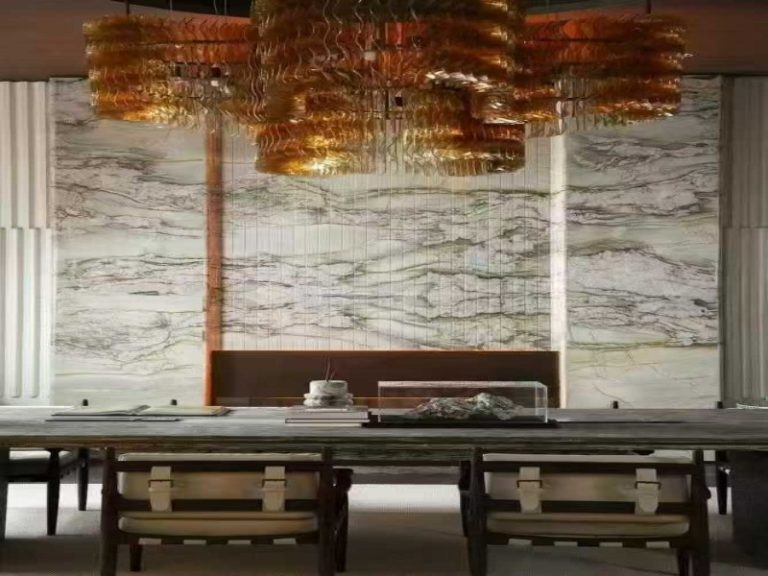
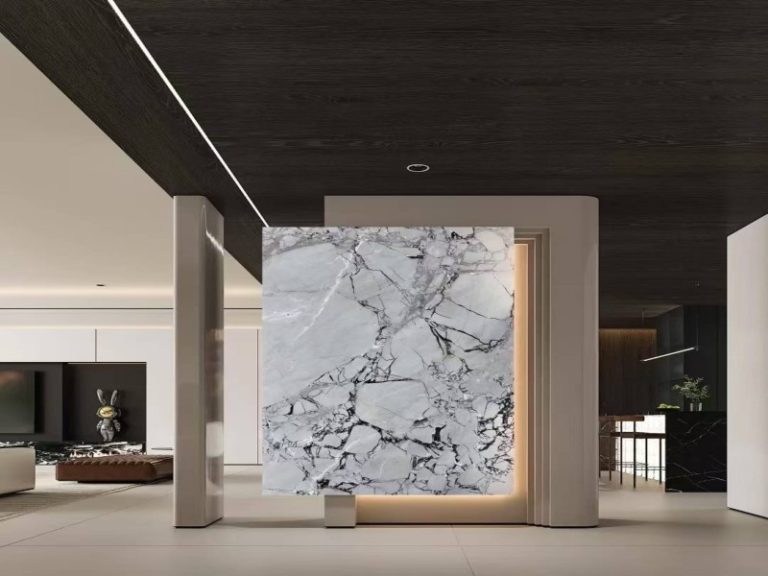
Blue Louise can create highly distinctive feature walls in luxury residences, hotel lobbies, reception areas, restaurants and private clubs. Large-format panels help preserve the natural scale of the stone’s mineral movement.
Bookmatched Installations
Where consecutive slabs are available, bookmatching can create dramatic symmetrical compositions. However, not every Blue Louise block produces the same bookmatch effect. The final result depends heavily on the original block structure, cutting sequence and dominant color zones.
Bathroom & Vanity Applications
The material can be used for vanity tops, bathroom feature walls and selected flooring applications. In wet environments, appropriate sealing, waterproofing, installation materials and slip considerations should be incorporated into the project specification.
Commercial & Hospitality Interiors
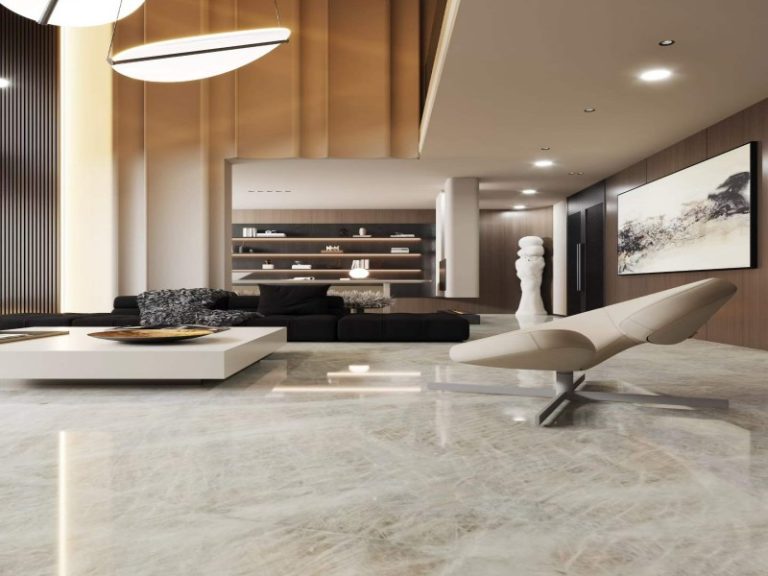
For luxury hotels, restaurants, boutiques and commercial reception areas, Blue Louise works particularly well as a focal material rather than a repetitive background stone. Strategic placement usually produces a stronger design result than using the stone indiscriminately throughout the entire project.
Natural Variation & Slab Selection Guidance
Blue Louise is a very high-variation natural stone. This characteristic is fundamental to the material and should be considered before slab approval.
One block may contain predominantly turquoise and blue-green areas, while another may contain significantly more rust, burgundy, gold, grey or cream. Even consecutive slabs from the same block can show noticeable changes in the position and proportion of individual colors.
For this reason, FAVAN STONE recommends selecting Blue Louise by actual slab photographs or slab-by-slab video rather than approving the material solely from a small sample.
For large projects, slabs should ideally be reviewed together and allocated according to their intended installation positions before fabrication. This is particularly important for islands, bookmatched walls, large vanity units and adjacent wall panels.
Fabrication & Slab Layout Considerations
Because the visual value of Blue Louise comes from its large-scale movement, fabrication planning should begin with the slab image rather than simply arranging pieces for maximum cutting yield.
For high-end projects, we recommend preparing a cutting layout that considers:
- Dominant blue and turquoise areas
- Location of gold, rust and burgundy formations
- Vein and color-flow direction
- Countertop and island focal areas
- Waterfall edge continuity
- Bookmatch sequence
- Sink and cooktop cut-out positions
- Potential reinforcement requirements
This approach may produce slightly lower raw slab utilization, but it normally creates a substantially better finished architectural result.
Installation & Maintenance
Professional fabrication and installation are recommended for Blue Louise, particularly for large islands, wall panels and pieces containing large openings.
A high-quality penetrating sealer should normally be applied after fabrication and installation. Although quartzite is generally selected for its durability, natural stones can still contain different minerals, fissures and localized areas with different absorption characteristics.
For routine maintenance, use a pH-neutral stone cleaner and avoid prolonged exposure to aggressive acidic or alkaline chemicals.
Blue Louise Quartzite Price
Blue Louise Quartzite price can vary considerably because this is an exotic natural stone with significant differences between blocks and individual slabs.
Pricing is influenced by slab size, thickness, color composition, blue intensity, pattern quality, structural condition, usable area, finish and the quantity required for the project.
For projects requiring several slabs, pricing should therefore be evaluated together with actual slab selection rather than only comparing a standard price per square meter.
Buying Guide for Blue Louise Quartzite Slabs
Before confirming Blue Louise slabs for a project, buyers, designers and fabricators should review:
- Actual slab photographs
- Slab dimensions and thickness
- Dominant color distribution
- Slab sequence
- Natural fissures and mineral characteristics
- Required finished-piece dimensions
- Bookmatch or vein-continuity requirements
- Cutting layout
- Surface finish
- Reinforcement and fabrication requirements
For wholesale and architectural projects, selecting slabs before fabrication provides significantly better control over color consistency and finished appearance.
Frequently Asked Questions
1. What is Blue Louise Quartzite?
Blue Louise Quartzite is an exotic Brazilian natural stone characterized by dramatic blue, turquoise, green, gold, rust and burgundy mineral movement.
2. Where does Blue Louise Quartzite come from?
Blue Louise originates from Brazil.
3. Is Blue Louise Quartzite the same as Blue Louise Granite?
Blue Louise Granite is a widely used commercial name for material sold in the same Blue Louise stone family. Classification can differ between suppliers and markets, so project specifications should confirm the selected material and slab batch.
4. What is Louis Blue Granite?
Louis Blue Granite is another commercial search and trade name associated with Blue Louise stone.
5. What colors are found in Blue Louise?
Typical slabs may combine turquoise, blue, green, blue-grey, gold, ochre, rust, burgundy, brown, cream and white.
6. Does every Blue Louise slab look the same?
No. Blue Louise has very high natural variation, and individual slabs can differ substantially in color balance and pattern.
7. Is Blue Louise suitable for countertops?
Yes. It is frequently selected for statement countertops where its dramatic natural pattern can become part of the overall interior design.
8. Is Blue Louise Quartzite good for kitchen islands?
Yes. Large islands are one of the strongest applications because they preserve a large uninterrupted area of the natural slab.
9. Can Blue Louise be used for waterfall islands?
Yes. Slab layout should be planned carefully to maintain visual continuity between the countertop and waterfall panels.
10. Can Blue Louise slabs be bookmatched?
Yes, when suitable consecutive slabs are available. The quality of the bookmatch depends on the block structure and slab sequence.
11. Is Blue Louise suitable for feature walls?
Yes. Its large-scale abstract movement makes it particularly suitable for luxury residential, hospitality and commercial feature walls.
12. What finishes are available?
Polished is the most common finish. Honed and leathered finishes may also be produced depending on the slab condition and project requirements.
13. What thicknesses are available?
18 mm, 20 mm and 30 mm are commonly available in the international slab market, although actual stock should always be confirmed.
14. Does Blue Louise Quartzite need sealing?
Sealing is generally recommended to help protect the finished surface from staining and simplify routine maintenance.
15. How should Blue Louise slabs be selected?
Full-slab photographs or videos are strongly recommended because small samples cannot represent the substantial natural variation of this stone.
16. How much does Blue Louise Quartzite cost?
Price depends strongly on slab quality, dimensions, thickness, color composition, pattern, usable area and current block availability.
17. Can Blue Louise be fabricated into custom sizes?
Yes. Slabs can be processed into countertops, islands, vanity tops, wall panels and other custom architectural pieces according to project drawings.
18. Is Blue Louise suitable for luxury commercial projects?
Yes. Its highly distinctive appearance makes it particularly suitable for hotels, boutiques, restaurants, reception areas and other projects requiring a strong natural-stone focal point.
Current Blue Louise Quartzite Slab Selection
Blue Louise varies significantly between blocks and slab sequences. Current slab photographs, dimensions and available quantities can be reviewed according to the color direction and application requirements of each project.
Expert Commentary & Analysis
Blue Louise should not be selected in the same way as a uniform commercial stone. Its value comes from the relationship between blue, turquoise, gold, rust, burgundy and neutral mineral areas across the complete slab. For high-end projects, slab composition and cutting layout can be as important as the basic material specification.
Project & Material Selection Notes
For projects requiring multiple Blue Louise slabs, FAVAN STONE recommends confirming actual slabs before cutting and preparing the fabrication layout according to the approved slab sequence. For islands, bookmatched walls and other visually continuous installations, finished-piece positions should be coordinated with the natural movement of each slab before production begins.